Contact

kiaora@standtall.nz

Follow

Stand Tall Community Trust

Creating the conditions for all youth to maximise their potential so that they can build the future they want to see.

Stand Tall Address Stand Tall Community Trust 148 Durham Street Tauranga 3110 Aotearoa - New Zealand | Stand Tall Email kiaora@standtall.nz
Stand Tall Facebook Stand Tall Instagram Stand Tall Linkedin
How we approach Pathways
We focus on building the capability to navigate pathways through education, training, and work over time.

Why pathways feel hard to navigate

Across Aotearoa, there is no shortage of pathways through education, training, and work. Yet many young people still struggle to move through them. This is not because they lack motivation or ability. It is because pathways are designed to make sense to institutions, not to the people expected to navigate them.

Pathways are organised around qualifications, programmes, sectors, and funding streams. These are necessary from a system point of view.

From a young person’s perspective, however, they can feel fragmented and hard to connect to real life. As a result, many young people disengage at transition points, between school and work, between study and training, or after something doesn’t work.

It is not because they can’t succeed, but because the system is hard to read from where they are.

How pathways are currently delivered

Pathways guidance is delivered by many dedicated professionals: careers teachers, youth workers, job brokers, vocational tutors, industry training facilitators, and workforce development teams. This work often focuses on:
  • explaining available options
  • supporting decisions at key moments
  • helping meet entry requirements
  • aligning individuals to programmes or roles
This support is essential.
 But it often relies on professionals translating the system on behalf of the young person. When support is present, pathways can work well.
 When it is not, or when circumstances change, many young people struggle to adapt, re-enter, or find a next step.

The gap: pathway literacy from the young person’s perspective

New Zealand has employability pathways.
 What it lacks is shared, user-centred pathway literacy.

Pathway literacy is the ability to:
  • make sense of options and expectations
  • test direction without fear of failure
  • adjust when something doesn’t work
  • re-engage with education, training, or work
  • navigate uncertainty over time

This is not a one-off decision.
 It is an ongoing capability that supports sustained participation in learning and work.
What Stand Tall does differently

Stand Tall does not design pathways, deliver qualifications, or place young people into jobs.

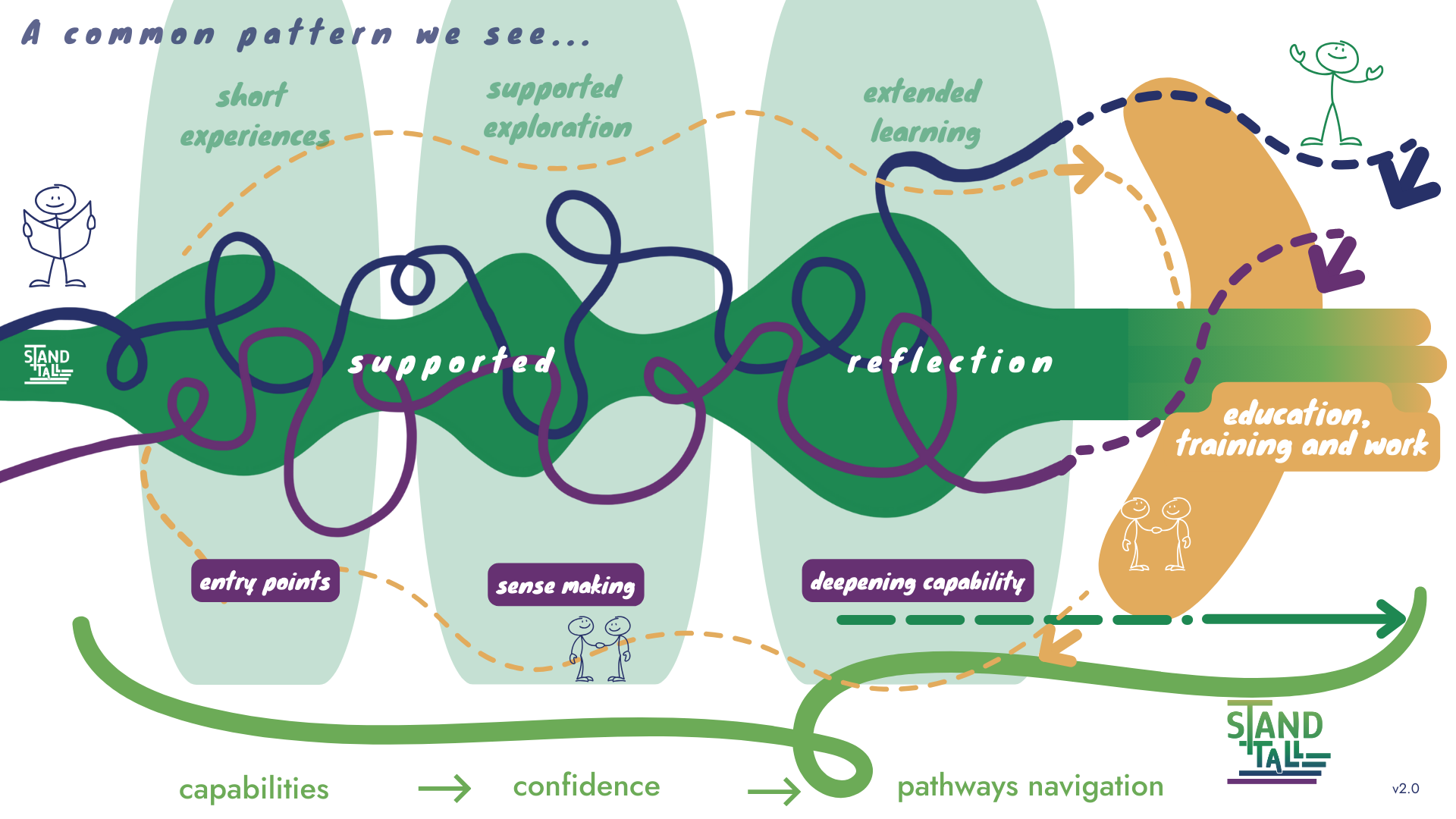
Instead, we build the capabilities young people need to navigate employability pathways over time including entering, sustaining, and re-entering education, training, and work. We do this by:
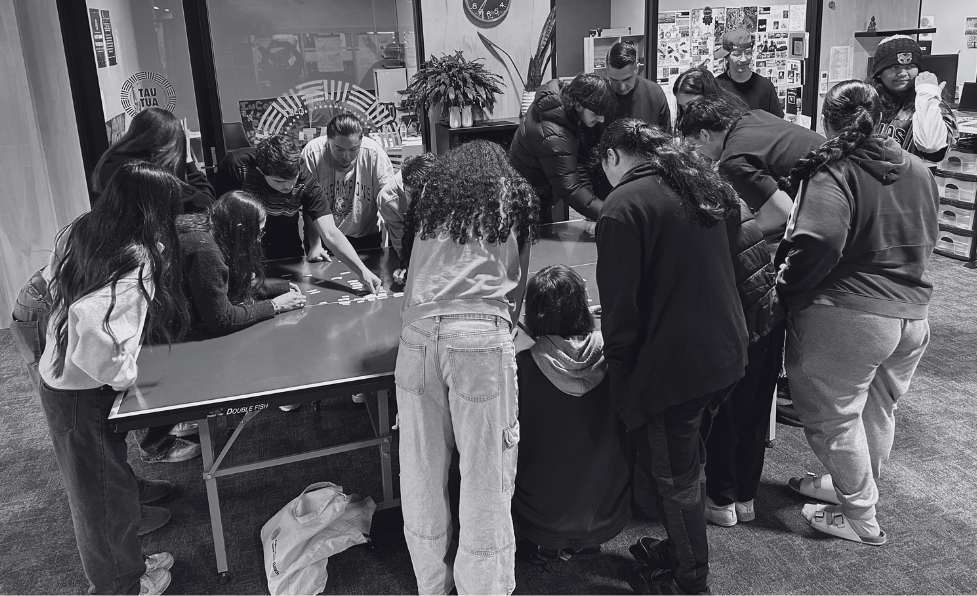
  • working alongside young people through real experiences
  • using entrepreneurial capabilities as practical tools for sense-making and adaptation
  • supporting learning while young people are moving
  • strengthening confidence and persistence at transition points
Our programmes sit alongside existing pathways provision, helping young people engage with it more effectively not replace it.
How young people build confidence and capability by navigating education, training, and work through real experiences — with support and reflection.

At the start I just wanted a clear answer. Now I’m more comfortable figuring things out, adapting, and trying again.


— Onramps participant
By employability, we mean the capability to:
  • enter education, training, or work
  • sustain participation when challenges arise
  • adapt and progress as circumstances change
  • re-engage after disruption
This requires more than information or placement: it requires confidence, judgement, and the ability to navigate complexity.
Stand Tall treats delivery as a learning platform.
As we work alongside young people, we pay close attention to:
  • where transitions break down
  • what creates confidence or confusion
  • how different parts of the system interact in practice
We share these insights with partners, funders, and collaborators to support a system that learns: one that becomes more navigable, responsive, and aligned with lived experience over time.
This is long-term work. We are committed to it through partnership, evidence-informed practice, and continuous learning.